A bottle stopping on a conveyor, a plastic film sticking where it should not, a surface attracting dust before processing, an electronic component damaged by an invisible discharge. In production, static electricity is not a minor detail: it is a process variable.
When electrostatic charges are not controlled, they can generate instability, defects, scrap, micro-stoppages and safety issues for operators. SMC ionizers allow targeted intervention by neutralizing static electricity at critical points of the line and helping make the process more stable, clean and continuous.
For industrial companies, machine builders and system integrators, Technology BSA offers SMC solutions for industrial static electricity control, with technical support in selecting the most suitable product for the application.

Industrial static electricity: when an invisible phenomenon creates very visible problems
Electrostatic charges can easily form during contact, friction, separation or material handling. This phenomenon is particularly common in processes involving plastics, films, paper, packaging, electronic components, lightweight materials and sensitive surfaces.
The critical point is that static electricity is often taken into account only when the problem is already evident. By then, the line has already started to “think for itself”. Not exactly the best production governance model.
In an industrial environment, an uncontrolled electrostatic charge can cause:
- unwanted adhesion between materials or products;
- accumulation of dust, particles and impurities on surfaces;
- instability in handling on belts and conveyors;
- difficulties during separation, pick-up or positioning phases;
- defects on packaging, films, labels and flexible materials;
- electrostatic discharges that are dangerous for sensitive electronic components;
- unpleasant or potentially risky shocks for operators;
- increased scrap and rework;
- process interruptions and unplanned machine downtime.
Correctly managing static electricity means protecting quality, production continuity, safety and cycle times.
What SMC ionizers do
SMC ionizers are devices designed to neutralize electrostatic charges on materials, surfaces or components during the production process.
Their operation is based on the generation of positive and negative ions. These ions are directed toward the area to be treated and compensate for the charges present on the material, reducing the unwanted effects of static electricity.
Depending on the application, ionizers can be installed:
- along transport and handling lines;
- near pick-up and deposit areas;
- on automatic machines and assembly systems;
- before printing, marking or labelling phases;
- in areas where dust and contamination need to be reduced;
- in processes involving sensitive electronic components.
The goal is not to “add an accessory”, but to stabilize a critical phase of the process. In practical terms: fewer recurring anomalies, fewer manual interventions, more control.
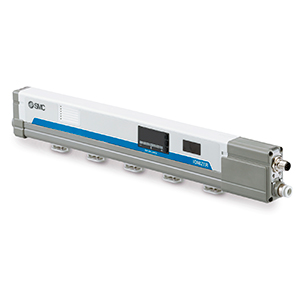
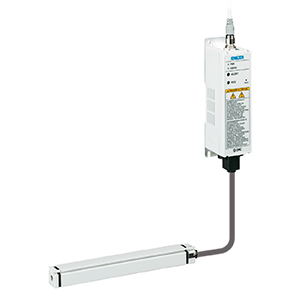
Measuring, neutralizing and controlling electrostatic charges
An effective antistatic solution always starts with process analysis. Before selecting the product, it is important to understand where the charge is generated, how it affects the production cycle and at which point of the line it becomes a problem.
SMC solutions for static electricity control make it possible to work on three complementary levels.
Measurement
Measurement makes it possible to detect the presence of electrostatic charges and identify the most critical areas of the process. It is the starting point for avoiding generic interventions and selecting a solution that is truly consistent with the application.
Neutralization
Ionizers neutralize the charges present on materials, helping reduce unwanted adhesion, surface contamination, instability and discharges.
Process control
Electrostatic control is not only about the single component, but about how it is integrated into the machine or line. Position, distance, treatment area, material speed and environmental conditions directly affect the effectiveness of the solution.
Where SMC ionizers are useful
SMC industrial ionizers are used in many production sectors. They are especially useful where lightweight materials, sensitive surfaces or delicate components make static electricity a critical factor.
Packaging
In packaging, electrostatic charges can interfere with plastic films, bags, blisters, labels and flexible materials. Materials may stick together, move unpredictably or attract impurities.
The use of SMC ionizers helps improve handling regularity and reduce defects that, on high-productivity lines, can quickly become significant costs.
Plastics, polymers and lightweight materials
Plastic and polymer processing is among the most exposed to static electricity issues. During transport, separation or handling, materials can become charged and generate build-ups, jams or unpredictable behaviour.
In these cases, electrostatic control helps keep the line more stable and reduce recurring micro-stoppages. Small stoppages, big headaches: exactly the kind of extra hobby no production department needs.
Printing, marking and labelling
During printing, marking or label application, static electricity can affect material positioning, adhesion and final result quality.
Neutralizing charges before the critical phase helps achieve more regular processes and limit rework.
Electronics and sensitive component assembly
In the electronics sector, electrostatic discharges can damage sensitive components and generate defects that are not always immediately visible. ESD risk is particularly delicate because it can affect the reliability and service life of the finished product.
Choosing ionizers with characteristics suited to the working environment is therefore an integral part of process protection.
Industrial automation and automatic machines
On automatic machines, pick-and-place systems, handling and assembly systems, the presence of electrostatic charges can interfere with precision, repeatability and operating stability.
Correctly integrating an antistatic solution helps reduce variability and anomalies, especially in areas where the material must be positioned, separated or transferred continuously.
Surfaces exposed to dust and impurities
Electrostatic charge can attract particles and contaminants to surfaces before processing, quality control, packaging or assembly.
Ionizers help reduce this effect, improving process cleanliness and product quality.
Benefits for production
Adopting an SMC solution for static electricity control can generate concrete benefits on several levels.
Scrap reduction
Fewer electrostatic charges mean fewer defects, less contamination and greater material stability during critical phases.
Less machine downtime
When products and materials move correctly, jams, build-ups and manual interventions on the line are reduced.
Greater safety for operators
Neutralizing charges helps reduce shocks caused by static electricity, improving operating conditions.
More predictable processes
A stable line makes it easier to maintain cycle times, quality and production continuity.
More effective quality control
Reducing impurities, dust and micro-defects helps make product inspection and validation phases more reliable.
How to choose the right SMC ionizer
The choice of ionizer should never be based only on the device format. Each application requires a specific technical assessment.
The main elements to consider are:
- type of material to be treated;
- intensity and distribution of the electrostatic charge;
- line speed;
- distance between ionizer and material;
- area to be neutralized;
- sensitivity of the product or component;
- presence of dust, particles or impurities;
- space available on the machine;
- required maintenance frequency;
- integration with the existing automation architecture.
An effective solution is based on the balance between product, installation point and application goal. Yes, the ionizer must neutralize. But above all, it must do so in the right place, at the right time and without becoming yet another component installed “because it will probably do something”.
Technology BSA: technical support for SMC antistatic solutions
Technology BSA supports industrial companies, OEMs, machine builders, designers and maintenance teams in the selection of components and solutions for industrial automation.
For SMC ionizers, support starts from the analysis of the application need: material being processed, critical point of the line, operating conditions, quality goals and integration methods.
The objective is to identify the most suitable antistatic solution for the process, avoiding generic approaches and prioritizing a technical choice that is consistent with the plant.
In a production context where continuity, quality and scrap reduction are increasingly important, controlling static electricity means working on a concrete lever of industrial efficiency.
Controlling static electricity to improve productivity
Static electricity is invisible, but its effects are very concrete: materials that do not flow correctly, products that become contaminated, components that are damaged, operators who experience shocks and lines that lose stability.
SMC ionizers allow this phenomenon to be managed in a technical and targeted way, helping make the production process more reliable, safe and continuous.
For many industrial applications, eliminating or reducing electrostatic charges is not a finishing detail: it is an intervention that can directly affect quality, cycle times and production costs.
Are you experiencing static electricity issues on your production line?
Materials sticking together, dust on surfaces, defective packaging, sensitive components or recurring micro-stoppages can all be signs of an uncontrolled electrostatic problem.
Technology BSA can support you in evaluating the SMC ionizers best suited to your application, helping you identify a solution consistent with your materials, line speed and production requirements.
Fill in the form
Our team will contact you to analyse your needs and evaluate the most suitable technical solution.