Production continuity does not depend only on the quality of the machines installed, but also on the ability to know exactly what is present in the plant: components, spare parts, lifecycle status, operational criticalities and risks related to obsolescence.
The IBE – Installed Base Evaluation service by Rockwell Automation was created precisely with this objective: to provide industrial companies with a structured and detailed picture of their installed base, transforming often fragmented data into useful information for technical, maintenance and strategic decisions.
Because, let’s be clear: if you do not know exactly what is installed in your plant, you are managing risk mostly “by feeling”. And in production, feeling is not exactly a KPI.
What is Rockwell Automation Installed Base Evaluation
The Installed Base Evaluation is a service for analysing and assessing industrial assets installed within a production facility.
Through a structured activity of data collection, classification and analysis, the service makes it possible to catalogue the main automation components present in the plant, such as:
- PLCs and controllers;
- HMIs and supervision systems;
- drives, inverters and motion control components;
- industrial switches and network components;
- industrial PCs;
- safety devices;
- sensors and field components;
- spare parts available in the storeroom.
The result is a detailed report that makes it possible to understand not only which assets are present, but also which are the most critical, which ones present obsolescence risks and which actions can be planned to improve reliability, availability and operational continuity.
Why evaluate the installed base
Many production facilities evolve over time through successive integrations: new lines, revamping projects, partial replacements, expansions and modifications carried out at different times and often by different teams.
As a result, after a few years, technical documentation does not always accurately reflect the real situation in the plant. The spare parts storeroom may contain components that are no longer strategic, while truly critical parts may be missing or insufficiently stocked. Some devices may still be operating, but already out of production, being phased out or difficult to replace quickly.
IBE helps bring order to this scenario and answer very practical questions:
- Which components are installed on the production lines?
- Which assets are still active, available or supported?
- Which devices are obsolete or at risk of obsolescence?
- Is the spare parts inventory consistent with the real criticality of the plant?
- Where are the highest downtime risks concentrated?
- Which modernization actions should be planned first?
It is therefore not just a technical inventory, but an industrial governance tool.
From reactive maintenance to strategic planning
Without an updated view of the installed base, maintenance risks remaining mainly reactive: intervention takes place when the problem occurs, often under urgent conditions and with limited room to choose the best solution.
With Installed Base Evaluation, instead, the company can adopt a more proactive approach. Assets are analysed according to technical criteria, lifecycle status, operational criticality and potential risk. This makes it possible to plan maintenance activities, rationalise spare parts and define modernization roadmaps aligned with production priorities.
The paradigm shift is clear:
Reactive approach
- Intervention after failure
- Partial visibility of assets
- Spare parts not always managed efficiently
- Decisions made under emergency conditions
- Greater exposure to downtime
IBE approach
- Prevention of critical issues
- Structured inventory of the installed base
- Spare parts aligned with criticality and risk
- Technical and economic planning
- Reduction of operational risk
In practice: less hunting for an unavailable component at 5:48 p.m. on a Friday. Which, incidentally, is never a strategy.
How the IBE service works
The IBE service is developed through a structured process designed to collect reliable data and turn it into operational recommendations.
1. Field data collection
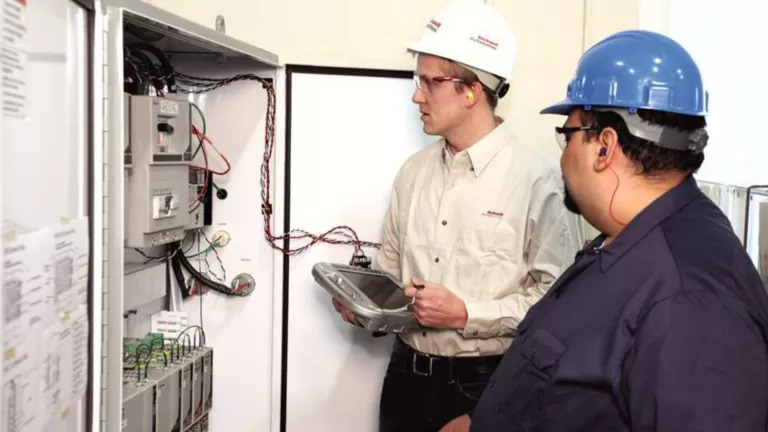
The first phase involves on-site assessment activities at the facility. During the site visit, information is collected on the electrical, mechanical and automation assets present in the plant.
The analysis may include Allen-Bradley and Rockwell Automation components, but also devices from other manufacturers. This is an important aspect, because it provides a more complete view of the infrastructure actually installed.
2. Asset analysis and classification
The collected data is analysed using dedicated tools to classify assets according to:
- location within the facility;
- area, line, machine or panel;
- lifecycle status;
- operational criticality;
- obsolescence risk;
- availability and consistency of spare parts.
This phase makes it possible to transform the technical inventory into a risk map, useful for identifying intervention priorities.
3. Final report and operational recommendations
At the end of the analysis, a detailed report is produced, which may include:
- summary of the installed base;
- asset lifecycle analysis;
- risk by line, machine or catalogue number;
- recommendations on spare parts;
- active, excess or no longer strategic components;
- areas with higher downtime risk;
- modernization recommendations;
- tools for lifecycle planning.
The value of the report is not only descriptive. Its real purpose is to support decisions: what to replace, what to keep, what to stock, what to plan in the budget.
Spare parts optimization
One of the most concrete benefits of IBE concerns spare parts management.
In many industrial contexts, the spare parts storeroom presents two opposite problems, often at the same time: excess components that tie up capital and missing critical components that increase the risk of plant downtime.
Installed Base Evaluation helps assess the storeroom based on the real criticality of the installed assets. This makes it possible to identify excess spare parts, inactive components, missing parts and stock levels more aligned with production and maintenance needs.
The benefit is twofold: lower costs linked to non-optimized inventories and greater availability of the spare parts truly needed to support operational continuity.

Obsolescence management and modernization planning
Obsolescence is not a sudden event. It is a process. And, like every process, it can be managed better when it is monitored in time.
IBE makes it possible to identify components that are still operating but exposed to risk because they are out of production, being phased out or no longer fully supported. This allows the company to plan modernization actions gradually, sustainably and consistently with the available budget.
The service therefore becomes a useful tool for building a technical roadmap, avoiding emergency replacements and defining priorities based on objective data.
The role of Technology BSA
Technology BSA supports industrial companies in the adoption of Rockwell Automation solutions and services, assisting customers in assessing technical needs, understanding operational priorities and defining the most suitable paths to improve reliability, efficiency and production continuity.
The IBE service represents a concrete starting point for building a data-driven maintenance and modernization strategy. Not a snapshot to be filed away in a folder, but a decision-making basis for planning actions, investments and corrective measures.
Knowing the plant to govern its evolution
Increasingly connected and complex production infrastructures require more conscious management of industrial assets. Having a clear view of the installed base means reducing uncertainty, anticipating risks and planning future activities with greater precision.
With Rockwell Automation Installed Base Evaluation, companies can transform their technical inventory into a strategic tool for maintenance, operational continuity and plant modernization.
Contact our experts
Technology BSA is available to provide more information about the IBE service and evaluate together the most suitable path for the needs of your production facility.
Fill in the form to start a technical discussion about your plant.