From design to production: food safety starts with the equipment
Food safety does not concern the finished product alone. It begins much earlier, with plant design, component selection and the ability of machines to operate in environments subject to high standards of hygiene, cleaning and control.
In the food & beverage sector, every element of the production line can affect process quality: materials, surfaces, compressed air, pneumatic components, resistance to washing procedures and ease of sanitisation. For this reason, compliance with HACCP requirements and the adoption of solutions designed according to hygienic criteria are now technical, regulatory and competitive factors.

HACCP: a structured approach to risk prevention
HACCP, an acronym for Hazard Analysis and Critical Control Points, is the reference system for identifying, assessing and controlling hazards that may compromise food safety.
Risks may be:
- physical, such as metal fragments, plastic particles or residues from worn components;
- chemical, for example contamination generated by lubricants, detergents or unsuitable materials;
- microbiological, linked to the proliferation of bacteria and pathogens in areas that are difficult to clean or prone to stagnation.

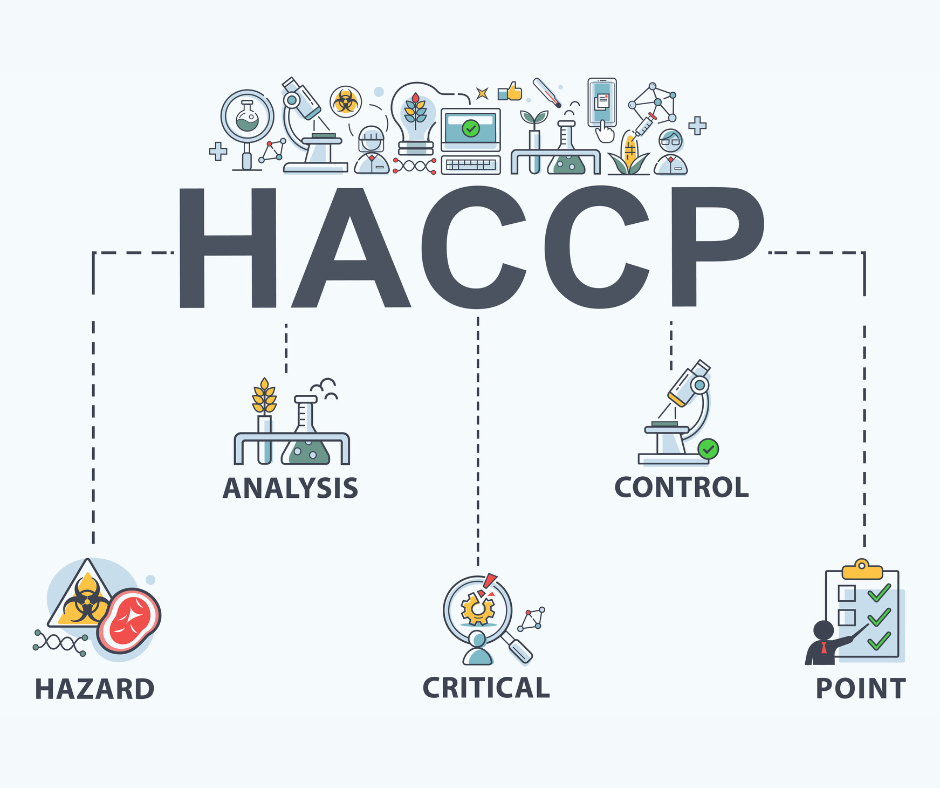
The HACCP method is based on seven fundamental principles:
- conduct a hazard analysis;
- identify critical control points, known as CCPs;
- establish critical limits;
- define monitoring systems;
- set corrective actions;
- establish verification procedures;
- maintain proper record-keeping procedures.
Within the European context, Regulation EC 852/2004 establishes that food businesses must apply procedures based on HACCP principles, making this approach a cornerstone of safety management in production processes.
Machine design directly affects food safety
A compliant plant must do more than operate efficiently: it must be designed to reduce the risk of contamination, facilitate cleaning and maintain appropriate hygiene levels even in intensive production cycles.
From this perspective, component design makes a difference. Hard-to-reach surfaces, cavities, crevices, accumulation points and unsuitable materials can retain processing residues, encourage bacterial growth and make sanitisation procedures more complex.
The principles of Hygienic Design therefore focus on several key aspects:
- materials resistant to corrosion and compatible with detergents and sanitisers;
- smooth, easy-to-clean surfaces;
- absence of dead zones or stagnation points;
- component accessibility for inspection and maintenance;
- the ability to operate in environments subject to frequent or intensive washdowns.
The objective is not only to improve compliance, but also to reduce downtime, simplify cleaning operations and contribute to the overall efficiency of the line.
Cleaning and sanitisation: safety, but also productivity
In food plants, cleaning and sanitisation operations have a significant impact on the time available for production. For this reason, components designed to be easily cleaned can also generate a tangible advantage in terms of plant availability and OEE optimisation.
A hygienically designed component makes it possible to:
- speed up washing procedures;
- reduce the risk of residues and contamination;
- limit excessive use of water, detergents and temperature;
- facilitate inspection activities;
- improve line operating continuity.
Food safety is therefore not in conflict with production efficiency. When the design is right, the two go in the same direction.
A simple yet decisive principle
When evaluating a component intended for a food application, two questions are central: is it easy to clean? and has it been designed in compliance with the relevant regulations and guidelines?
SMC solutions for food & beverage environments
SMC offers a range of solutions developed to meet the needs of food processing plants and machine builders serving the food & beverage sector.
The offer includes products designed to operate in:
- areas subject to frequent cleaning;
- zones exposed to splashes or washdowns;
- applications with specific food compatibility requirements;
- processes in which compressed air and pneumatic components must help maintain high hygiene standards.
SMC organises its food-grade solutions into differentiated product families:
- HF1 Series, with specifications related to the use of lubricants and anti-corrosion agents intended for food machinery;
- HF2 Series, which also uses materials compliant with US FDA regulations;
- HF3 Series, including products certified by third-party organisations or manufactured with materials compliant with regulations applicable to food-contact surfaces.
These solutions can be integrated into different stages of the production process, including drying, cooling, filling, agitation and mixing, slicing, cleaning, transfer and packaging.
Compressed air and contamination risk: a critical point to manage
In many food applications, compressed air is used directly on the product or on packaging. This is the case, for example, in blowing, particle removal or handling operations.
However, compressed air cannot automatically be considered clean: during compression, transport and distribution, it may carry particles, water, oil and microbiological contaminants.
For this reason, air quality must be carefully assessed within the risk analysis and managed through appropriate filtration systems, especially when it comes into direct or indirect contact with the food product.
HF2-BF: SMC antibacterial compressed air treatment
Among SMC solutions dedicated to the sector, the HF2-BF Series is designed for the antibacterial treatment of compressed air and for applications in which it is necessary to reduce the risk of contamination in food processes.
The HF2-BF range offers:
- compressed air sanitisation, with an antibacterial activity value equal to or greater than 4 according to the JIS L 1902 standard;
- bacterial retention performance LRV ≥ 9, suitable for safer blowing onto food products;
- oil mist removal, with an outlet oil concentration of up to 0.003 mg/m³;
- antibacterial coating to limit bacterial growth on component surfaces;
- NSF-H1 grade grease;
- compliance with FDA standards;
- compatibility with air, nitrogen and carbon dioxide;
- maximum flow rate of up to 800 l/min.
The series can be configured through modular air treatment units and specific filters, including solutions for antibacterial filtration, odour removal and bacterial removal with a filtration rating of up to 0.01 μm.
Suitable components, more reliable processes
Food safety requires an integrated vision. It is not enough to address a single risk: machines and production lines must be designed so that every component helps reduce the possibility of contamination and simplifies the maintenance of hygiene standards.
For food producers and OEMs, choosing components developed for these contexts means working along three strategic directions:
- compliance, with HACCP requirements and applicable regulations;
- reliability, thanks to components suitable for demanding environments and washdown procedures;
- efficiency, with more manageable cleaning processes and lower risks of downtime or non-compliance.
Technology BSA and SMC expertise in support of the food industry
Technology BSA supports machine builders and companies in the food & beverage sector in selecting SMC solutions suited to application needs, hygiene requirements and plant operating conditions.
From the selection of pneumatic components to compressed air management, through to the identification of products designed for environments subject to frequent sanitisation, the goal is to support safer, more efficient processes that are aligned with the standards required by the food market.
Would you like to learn more about SMC solutions for food safety?
The Technology BSA team is available to assess application needs, suitable components and solutions for plants and machines in the food & beverage sector.
Contact us to receive more information or request a technical discussion.